Direction: Anna Borràs
Choreography: Anna Borràs in collaboration with the dancers
Performed by: Anita Czako, Hilda Holm, Lea Amneby Snickers, Maja Grimsted, Daria Cristea, Teodor Cauș, Valeriia Lysenkovska, Valeriia Churai, Juliia Tytska, Nikita Sulko
Dramaturgical consultant: Martina Tomić
Musical composition: Alex Paton
Light design: Ema Kani
Costumes: Karlo Blažina
Props / Scarves: Montserrat Picó
Fabric supplied by: Joan Maria Borràs
Production assistant: Matilda Bjärum
Photo and video: Ana Opalić
Trailer: Nina Đurđević
Visual design: Tihomir Filipec
Premiere: 30/9/2026 at theZagreb Dance Centre
This performance is created within the framework of the dancEUA project, co-funded by the European Union through the Creative Europe programme. The project is implemented by the following organizations: Studio za suvremeni ples (HR), Central Europe Dance Theatre (HU), M Studio (RO), Vitlycke – CPA (SE) and Ukrainian Contemporary Dance Platform (UA).
In collaboration: Zagrebački plesni centar (ZPC)
Financially supported by: European Union, Ministry of Culture and Media of the Republic of Croatia, City of Zagreb, and Kultura Nova Foundation.
Supported by: OŠ Stjepana Radića – Bibinje, Skånes Dansteater, Danscentrum Syd and København Danser Studios, for providing studio facilities during the creation and rehearsal process.
ABOUT
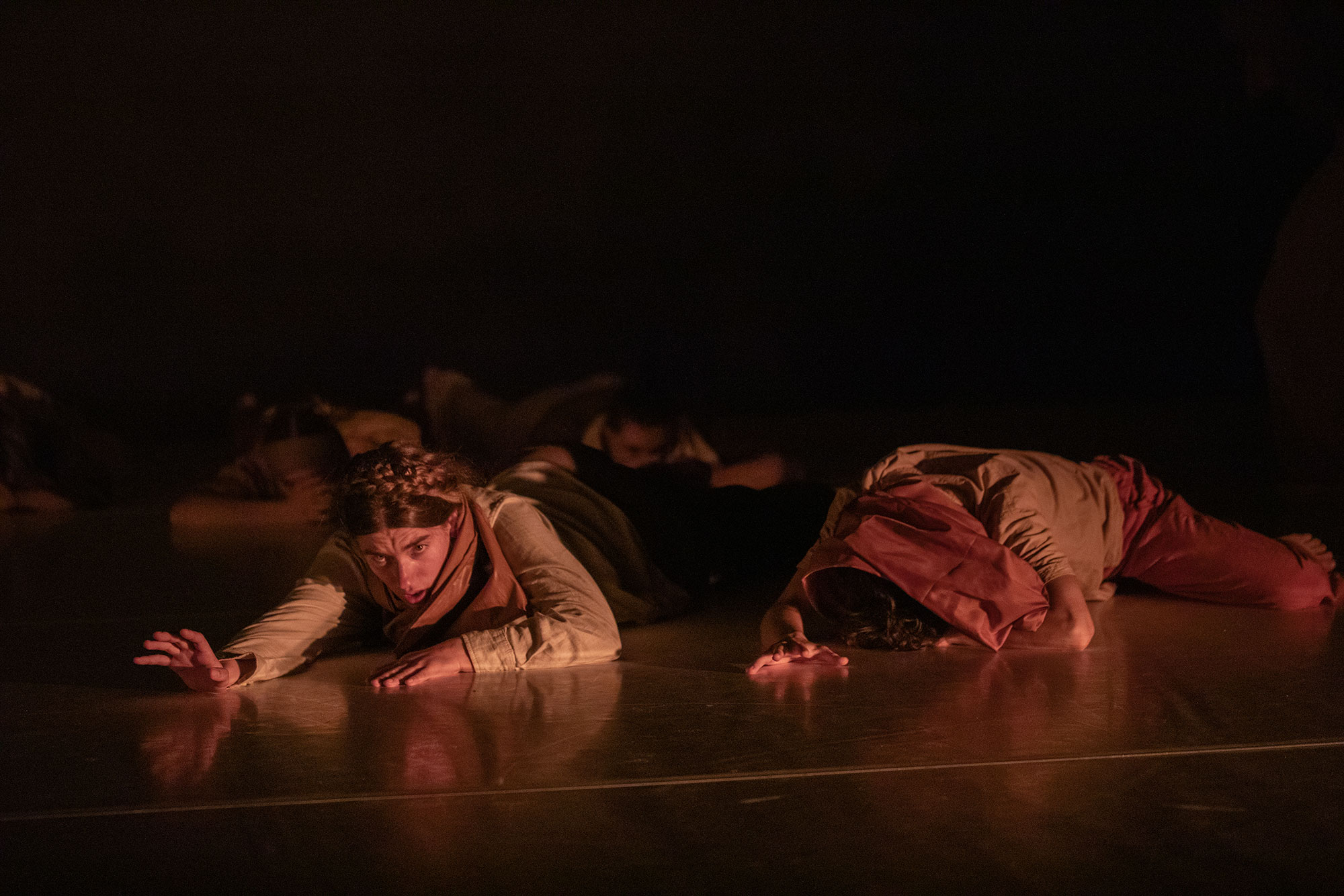
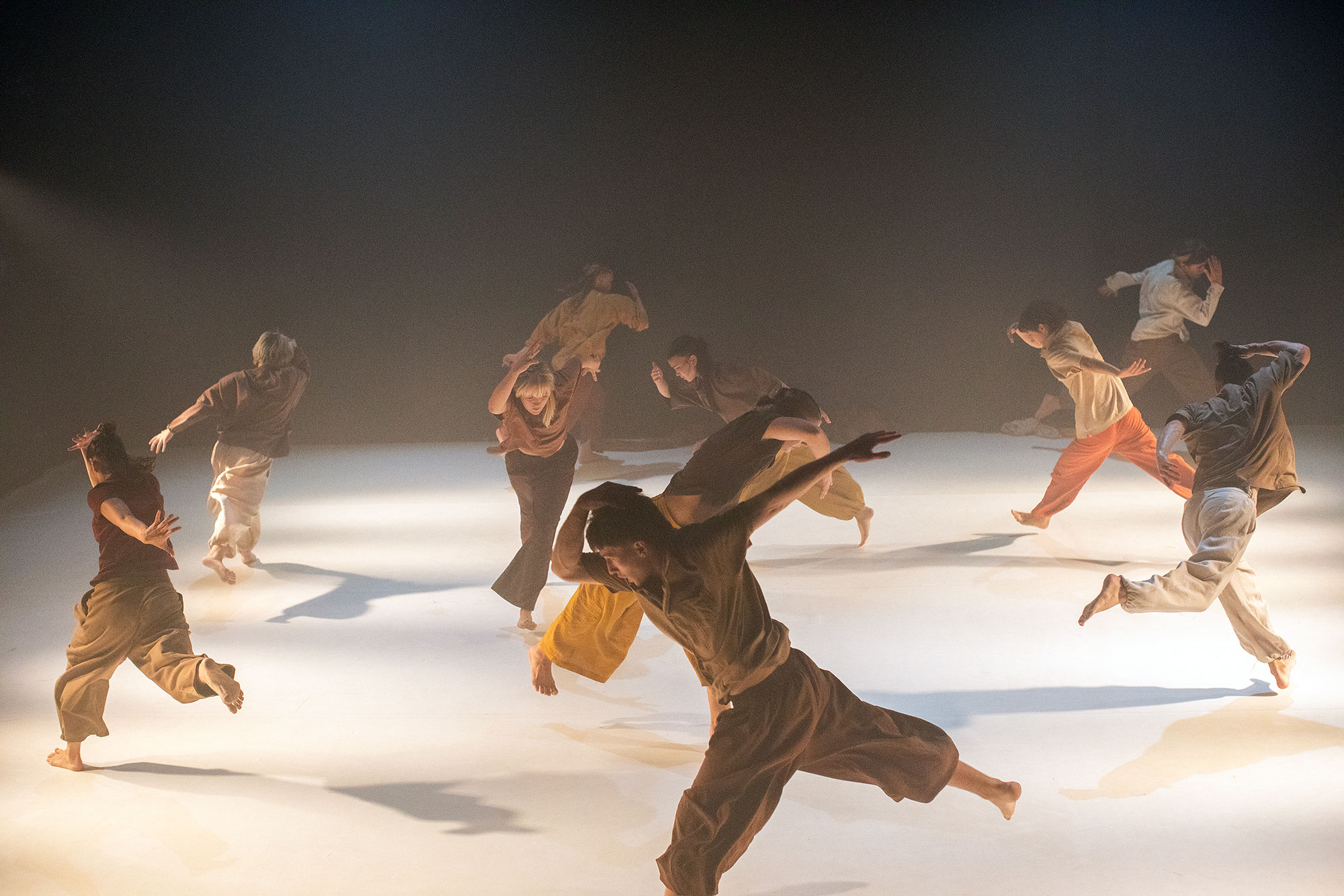
CALIMA is a choreographic investigation of Saharan dust storms that travel across borders and oceans, carried from North Africa toward the Canary Islands and beyond.
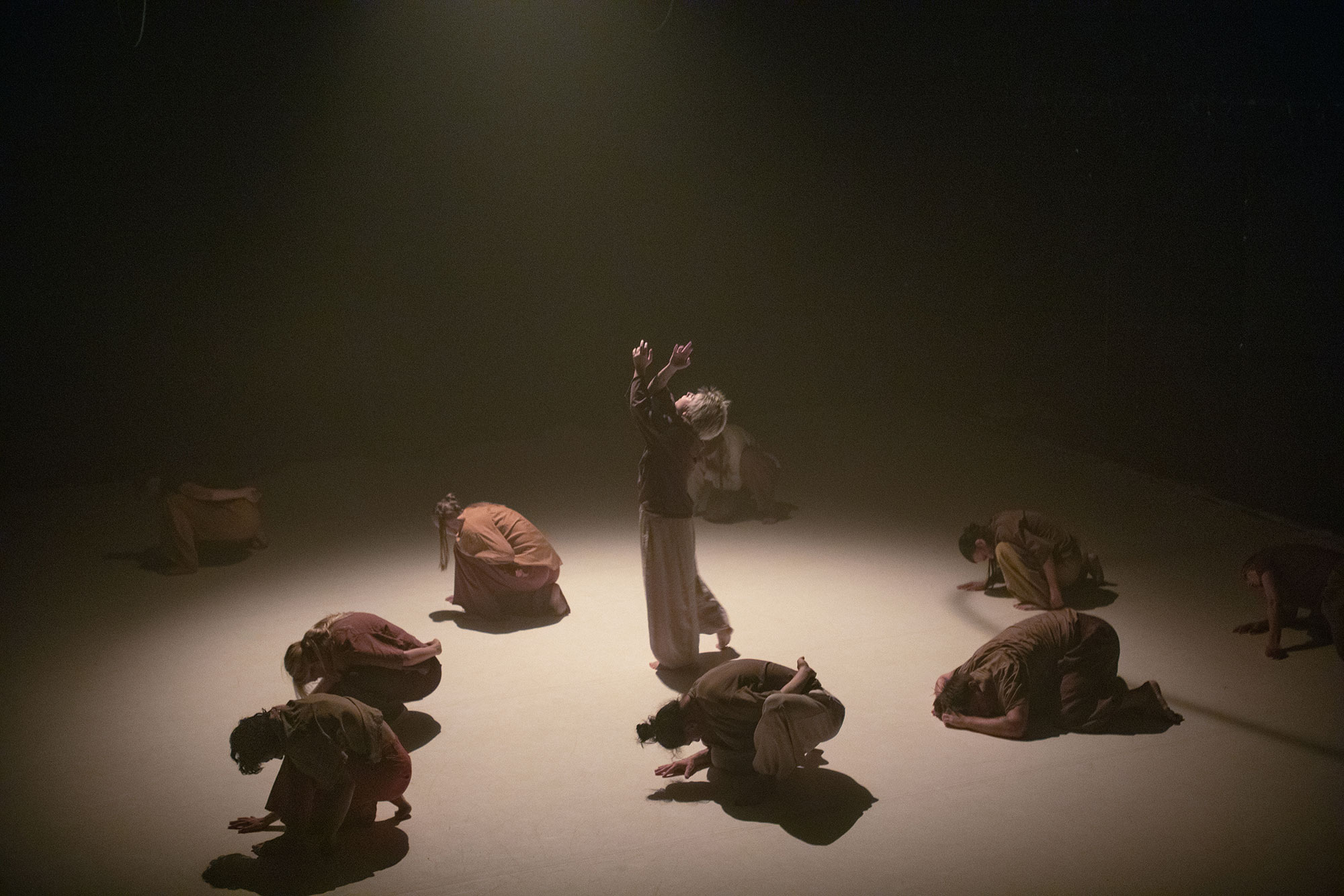
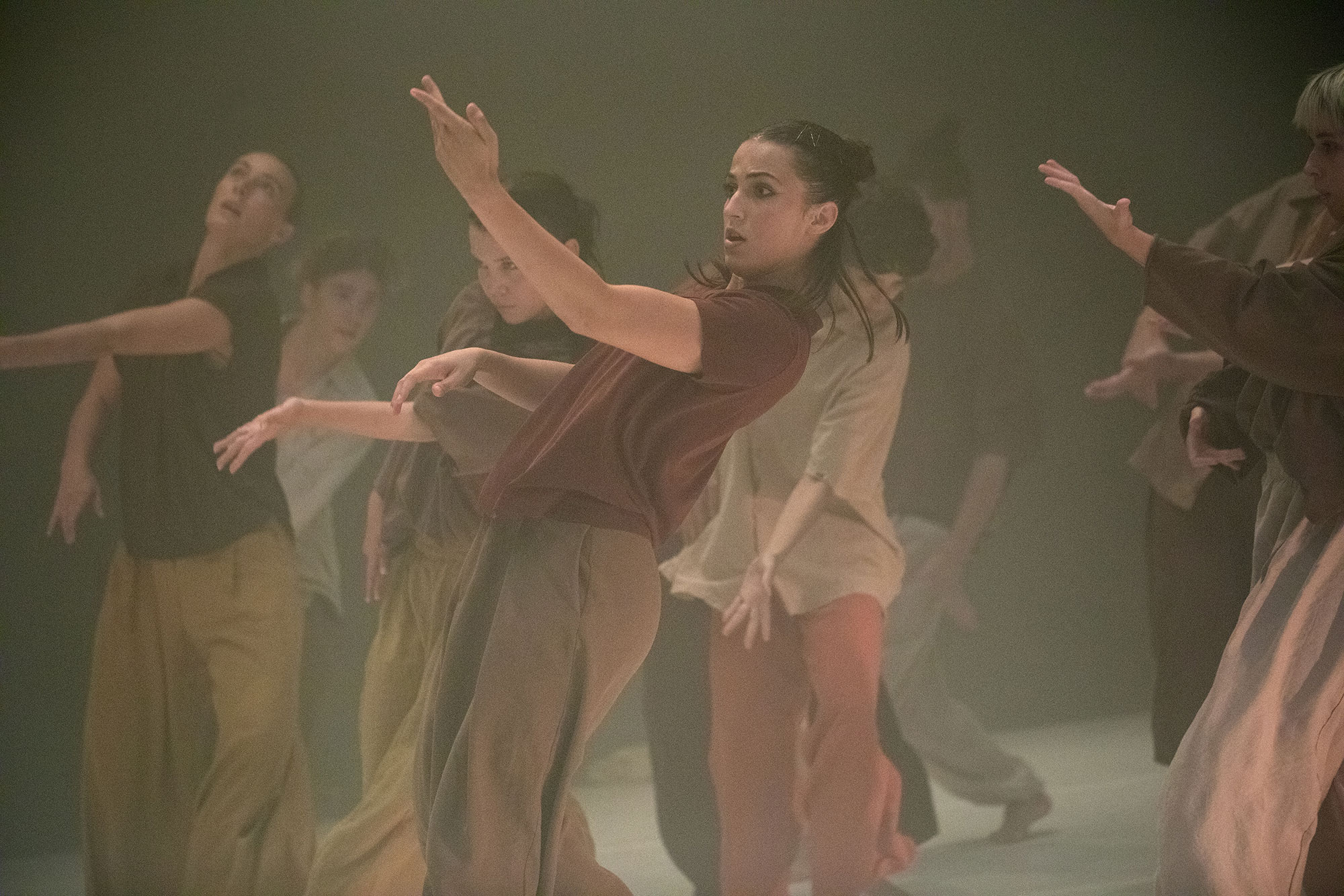
These atmospheric movements transform landscapes into suspended environments where the horizon disappears, visibility is reduced, and the air itself becomes thick with matter.
The work draws also on the haboob, a powerful wind driven dust storm that lifts and carries vast amounts of earth into the atmosphere. If the haboob is the force that sets the dust in motion, calima is the suspended atmospheric condition that follows; less an explosion or storm than an atmosphere that surrounds and enters the body.
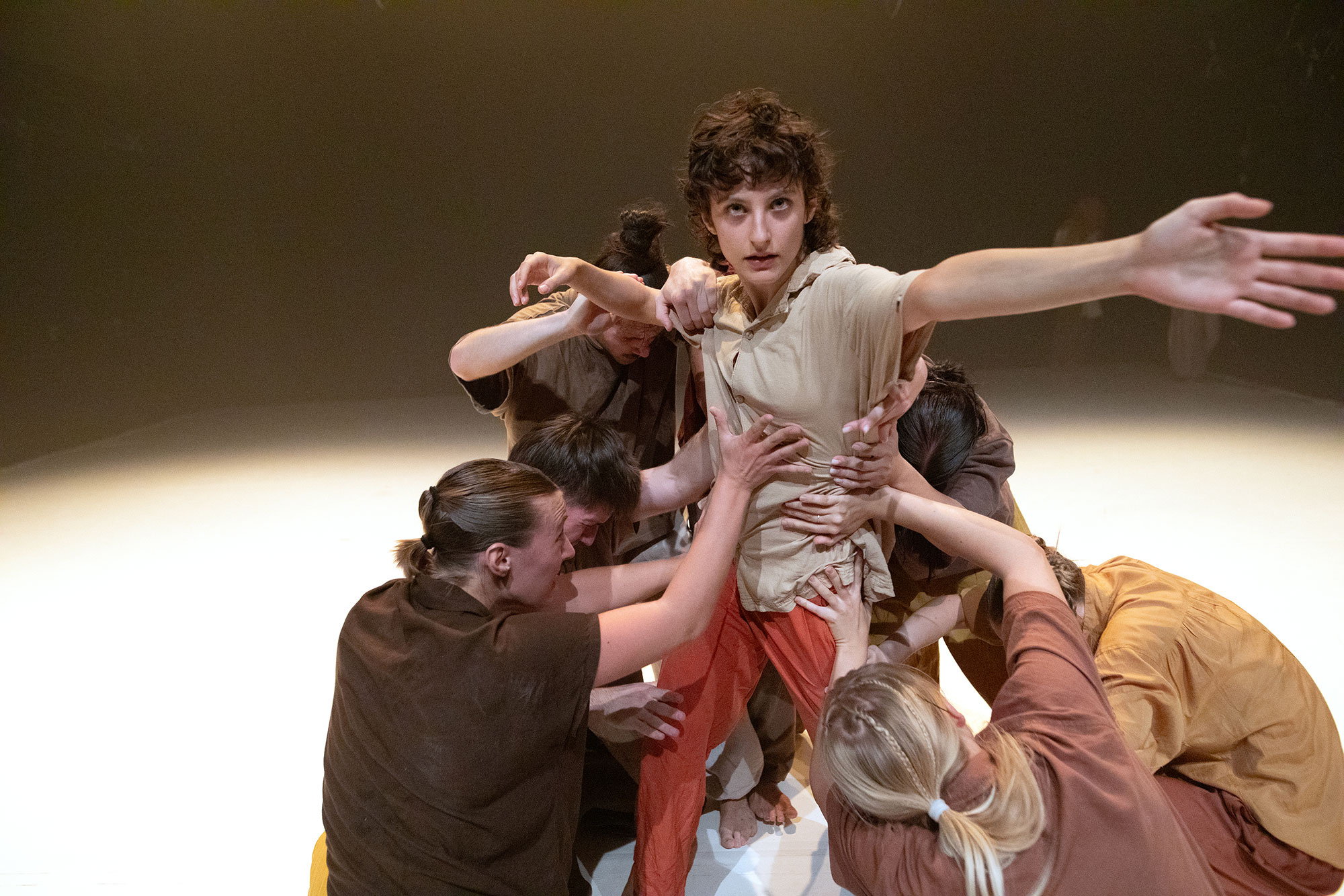
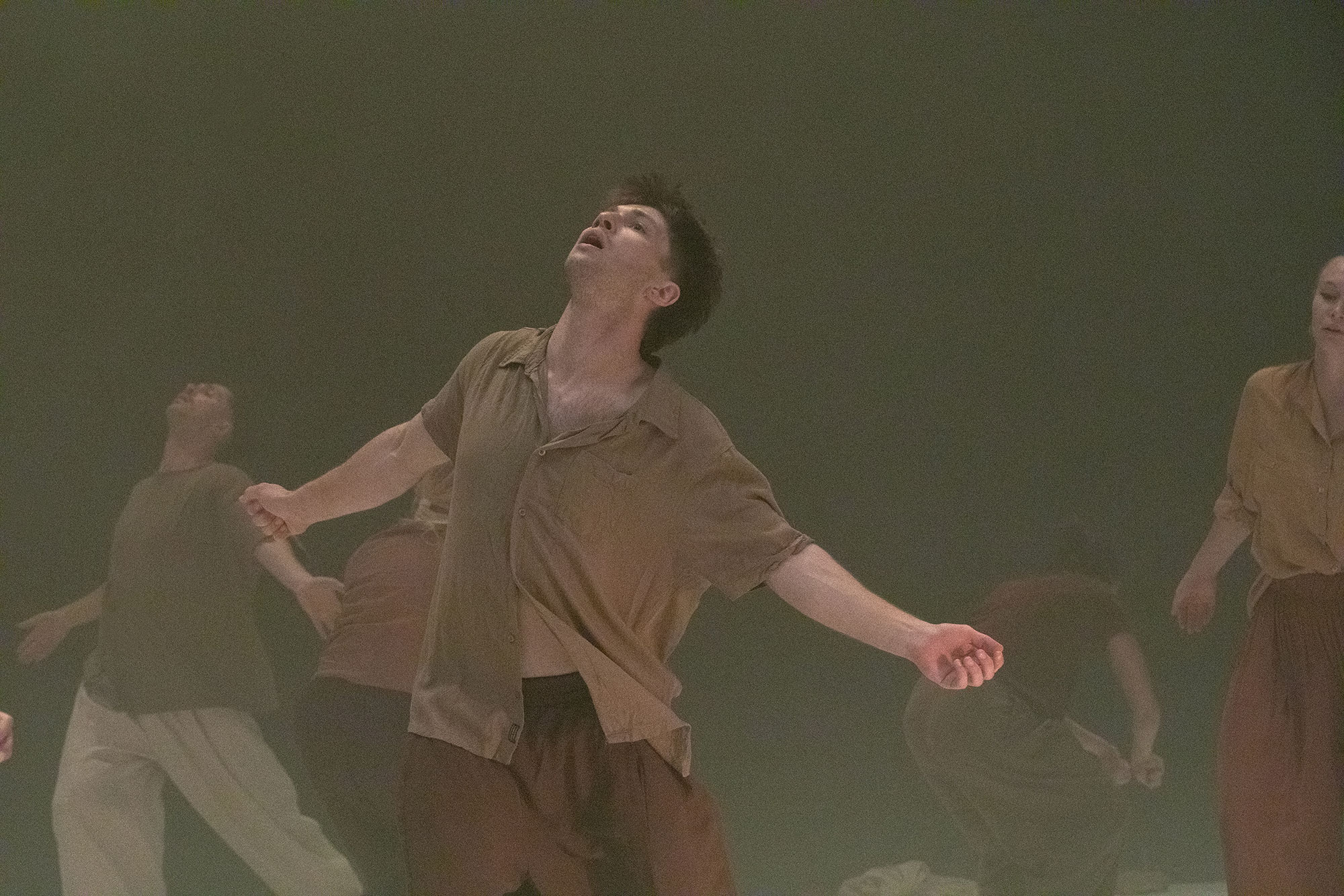
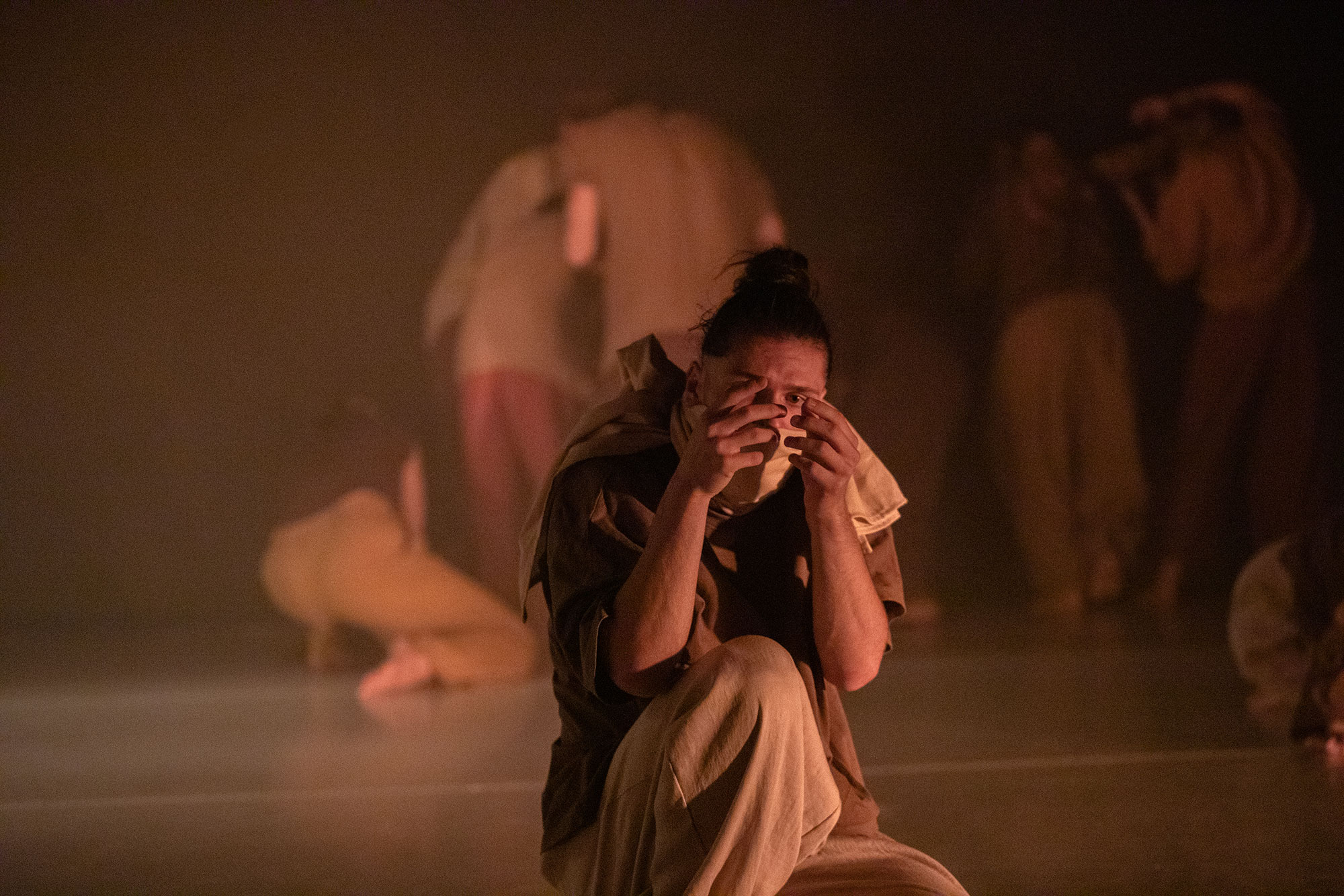
At the center of this work is breath; breath under pressure, breath interrupted, breath shared. CALIMA is not only a landscape we observe, but an atmosphere we must breathe through. It enters the body, alters rhythm, and reshapes perception from within.
I am interested in calima as a condition where breathing becomes negotiation. Air is no longer neutral; it is dense, visible, charged with particles of earth in transit. Each inhalation becomes an encounter with distance, Sahara carried into skin, lungs, and memory.
Within this haze, dust is not absence but presence in circulation. Fine particles become a language of migration and transformation, carried across space by wind. The body becomes a temporary archive of what passes through it.
The choreography emerges from this fragile relationship between body and air. Movement is shaped by how breath expands, resists, or shortens under changing atmospheric density. Bodies are not placed in calima they are continuously produced by it.
Sound and light, will function as extensions of this breathing environment. They respond to inhaling and exhaling with the dancers, constructing an unstable perceptual field where image, air, and body is inseparable.
At the core of CALIMA is also a question of relation: how do we remain together when breath is compromised? When visibility fades, breath becomes a shared condition; an invisible thread connecting bodies in space.
CALIMA becomes both material and metaphor: a state where matter/wind is constantly entering and leaving the body.
CALIMA proposes a shared atmospheric field where choreography is not only seen, but breathed; where movement arises from density, limitation, and the fragile persistence of breath.
Calima is usually experienced as a suspension; the air becomes dense, the horizon disappears, everything is filtered in ochre light. It’s less an explosion/storm than an atmosphere.